
Whoa! Ever pasted a long signature into an explorer and felt like you were looking at another planet? It’s a weird mix of relief and suspicion when a transaction finally confirms. I’m biased, but blockchain debug tools are oddly satisfying—until they’re not. Okay, so check this out—this piece walks through how to read Solana transactions with the on-chain explorer and why many users reach for the solscan explorer official site for the extra detail.
At a glance, a Solana transaction page is compact. It shows the signature, the slot, the status, the block time, fee paid, and a list of instructions. But skim too fast and you miss the story. My instinct said “just check the status” and move on. Actually, wait—there are key clues deeper down. On one hand you have transfer events that are obvious. On the other hand some token moves are buried in program logs. It can be confusing, though actually once you know what each piece means it becomes far easier to spot problems.
Short version: the signature is your single-source truth. Paste it into the explorer and every node will either find it or not. If it’s not found right away, wait a minute and refresh. Network propagation matters. Seriously?
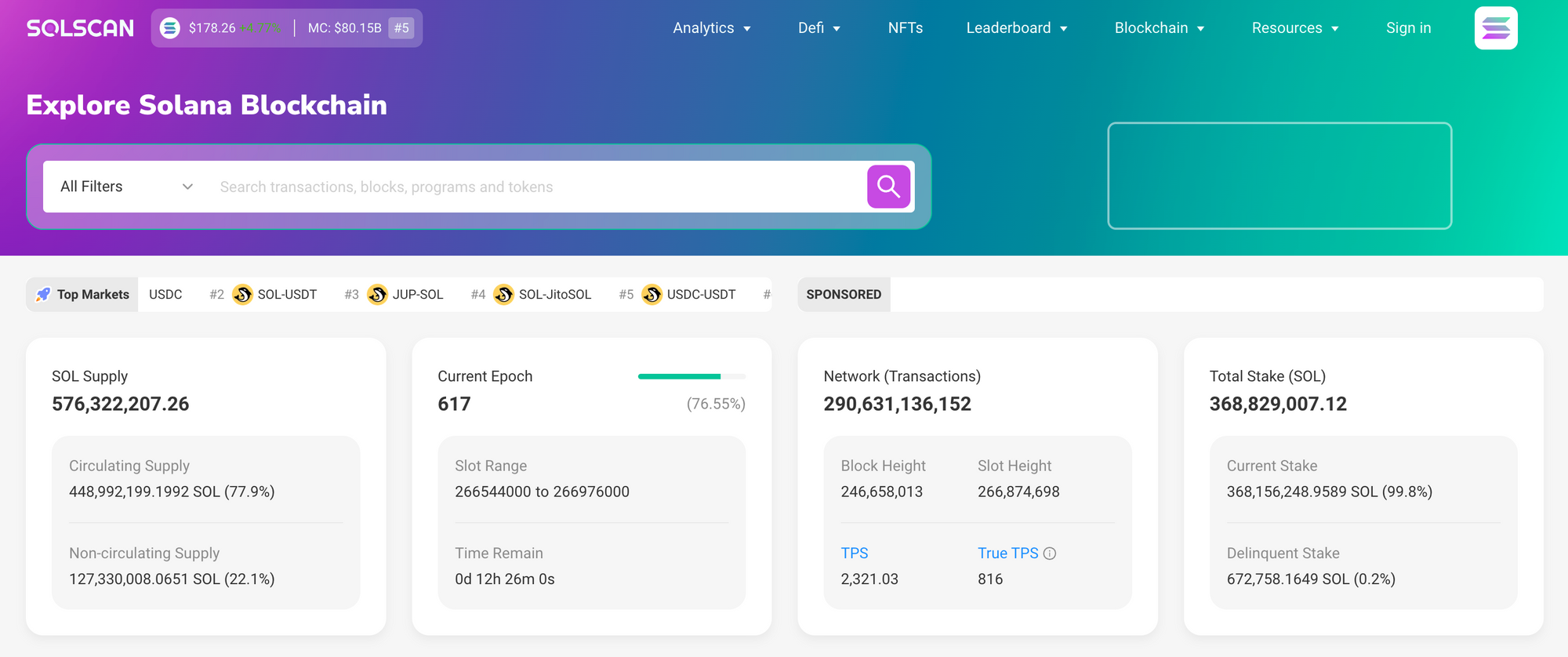
Transaction anatomy — what to look for
Signature — unique ID for the tx. Easy. Slot — the ledger block containing the tx. Block time — human timestamp. Status — success or error. Fee — tiny, but important when debugging repeated failures. Instruction list — the meat. Some instructions are simple system transfers. Others call programs and can trigger inner instructions, token swaps, and state changes. Hmm… inner instructions are where surprises hide.
Program logs tell a story. They show emitted messages and errors from the program that executed your instruction. If a swap fails, the log often says why. Pre- and post-balances show who lost or gained lamports (SOL) and by how much. For SPL tokens you’ll see token balances and account addresses.
Here’s what bugs me about default views: they sometimes hide inner instructions unless you expand them. That omission costs time. So expand everything when troubleshooting. Also, memos can carry human-readable notes. People use them for invoices, notes, or just trash. Don’t ignore memos if you expect a reference.
Solana Explorer vs Solscan — pick your tool
The official explorer is solid for basic checks. It gives a clean timeline and is maintained by the network team. Solscan tends to be friendlier for deep dives. It surfaces token transfers, decoded instructions, and human-readable program names more aggressively. For many devs and power users, that extra layer of parsed info saves minutes that add up.
Pro tip: when a tx touches multiple token mints or invokes a serum/AMM program, use Solscan to see decoded swap legs and token flows. It’s literally the difference between “what happened?” and “ohhh, the route swapped through X and paid Y in fees.” I’m not 100% sure why some program names aren’t decoded, but most popular programs are covered.
Common troubleshooting steps
1) Confirm the signature. Copy-paste it exactly. No extra spaces.
2) Check status and logs. Look for error codes like InstructionError.
3) Compare pre/post balances. Did only the fee drop? Or did accounts change?
4) Inspect inner instructions. They often contain token transfers that the top-level view hides.
5) Look at the block time. If it’s old, the state may have changed since.
Something felt off about one recent dispute: a token transfer showed in the program logs but not in the recipient’s token account balance due to rent exemption quirks and an uninitialized token account. That tripped us up until we realized the recipient needed an associated token account. So check account initialization status when an expected deposit doesn’t show up.
Reading instruction details
Instructions list the program invoked and the accounts passed in. If the program is a token program, the instruction type (Transfer, Approve, Burn) is often shown. If it’s a DeFi protocol, you’ll see the program id and maybe a decoded action like “swap” or “placeOrder.” When in doubt, copy the program id and look it up—on Solscan it often resolves to a project name or a verified label. That context changes everything.
Fees are another clue. High-than-expected fees indicate retries or failed instructions. If you see multiple fee deductions from the same signature, that’s a red flag. Wait, let me rephrase—multiple fees usually mean the client re-sent or retried the transaction. Not common, but it happens with flaky RPC endpoints.
Safety checks — what to verify before trusting a transaction
Verify the program id. Is it the real program or a lookalike? Check the token mint address. Confirm the recipient account is initialized for that SPL token. Verify the amount in human terms by applying decimals. And check logs for “Success” versus custom error codes. If you’re dealing with NFTs, verify the metadata program id and that the mint matches the collection.
Also, watch for interactions with unknown programs. If a wallet signed a tx that calls an unfamiliar program, pause. Scammers sometimes trick users into approving arbitrary program instructions. I’m biased here—I’ll be honest: if I don’t recognize the program, I stop and research. You should too.
Speed tips and shortcuts
– Use the signature search first. It saves time.
– Use the “Show inner instructions” toggle. Always.
– For token amounts, apply decimal places; raw amounts are often in minimal units.
– Look for decoded program names on Solscan; it short-circuits identification.
– If you need historical context, check neighboring slots for related txs from the same address.
Common questions
Q: Why does my transaction say “Confirmed” but later fails?
A: Confirmed means the cluster accepted it at a certain commitment. If finalization changes due to forks or reorgs, the effective outcome can differ. For critical ops wait for “finalized” when possible.
Q: Where did my SPL tokens go? I only see SOL moving.
A: Token transfers often appear as inner instructions or as token program events. Expand the instruction details. If the recipient account wasn’t initialized, the transfer might have failed or created a new account; check logs and account states.
Q: Is Solscan safe to use?
A: Solscan is a widely used explorer with decoding and analytics layers. Use it to read, not to sign transactions. For signing, rely on your wallet; for deep inspection, Solscan is a helpful read-only tool.
In the end, reading a Solana transaction becomes a habit. You spot the signature, check status, expand logs, and scan inner instructions. Repeat. The first few times you’re slow. But soon you can read one in a minute. Things will still surprise you sometimes—DeFi routes, strange program calls, memos with jokes. Life on Solana is lively. Somethin’ tells me you’ll get the hang of it.